Collection
Data from Siemens PLCs, SCADA, Modbus, OPC UA, IFM equipment and existing industrial infrastructure.
Industrial integration · SAP
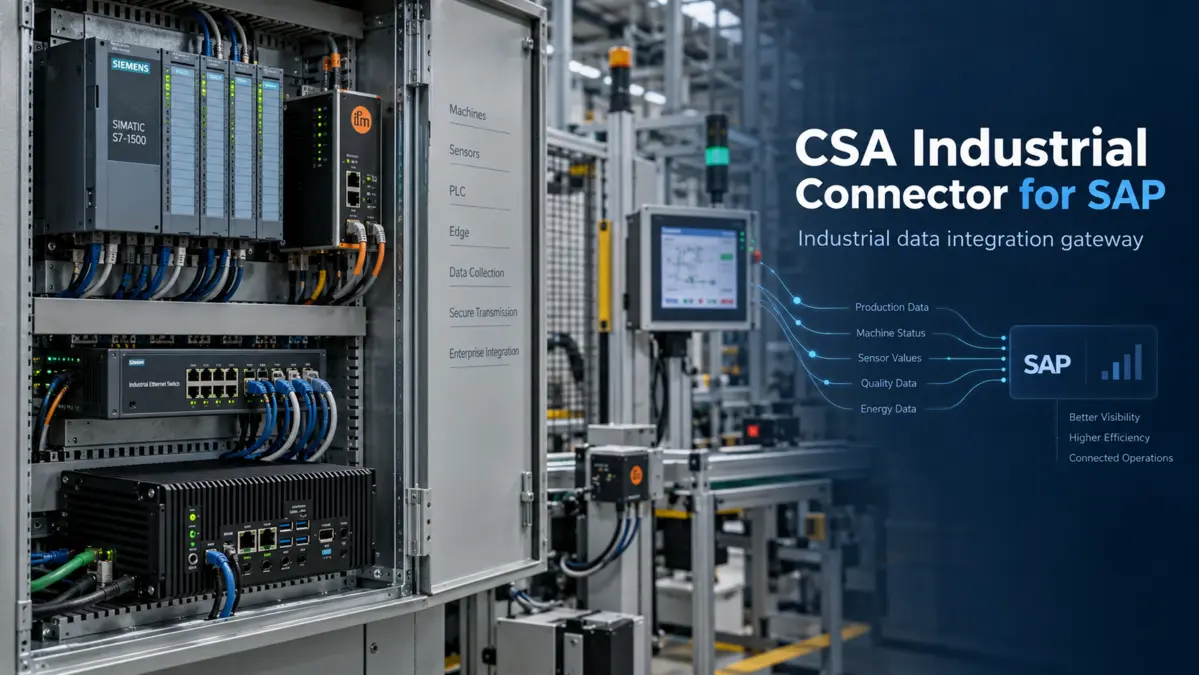
CSA Industrial Connector for SAP collects, validates and forwards data from PLCs, SCADA, meters, sensors and industrial equipment to the SAP interfaces defined for the project.
The real integration gap
In many plants, real production information remains in PLCs, HMIs, SCADA systems or manually completed files. CSA Industrial Connector for SAP creates a controlled layer between the shop floor and the enterprise system so relevant data can reach SAP in a structured way.
Data from Siemens PLCs, SCADA, Modbus, OPC UA, IFM equipment and existing industrial infrastructure.
Filtering, normalization and verification rules before data enters the enterprise flow.
Delivery to interfaces approved together with the customer SAP and IT teams, following the project-defined flow.
Data flow
The CSA connector handles collection, structuring and verification of shop-floor data.
The architecture is configured for the actual project with clear responsibilities between production, OT, IT and SAP teams. It does not assume all equipment is new, standardized or able to deliver the same data.
Applications
Produced quantities, counters, machine states and events used for reporting.
Process measurements and verification results prepared for agreed workflows.
Electricity, gas, steam, water and compressed-air consumption from real infrastructure.
Stops, alarms and operating time for project-defined analysis and reporting.
Data associated with batches, equipment or process stages when the customer architecture makes it available.
Pilot on one machine or line followed by validated expansion to department or plant level.
TECHNICAL REFERENCE
Integration starts from an operational need and from interfaces approved for the existing systems, not from a promise of universal connectivity.
Define the event or measurement, equipment identifier, engineering unit, frequency and destination. Automation and SAP teams agree the permitted interface, authentication and data ownership. A field protocol and a business interface do not automatically share the same data model.
Timestamp, source and quality make it possible to distinguish valid measurements from stale or unavailable values. Scaling and mapping should be verified before data is used in reports or transactions. OPC UA can provide a structured model, but implementation details still matter.
The project should define temporary buffering, duplicate detection and recovery after communications return. The strategy depends on the data flow and SAP interface and should be demonstrated through testing rather than assumed from the connector name.
Technical reference
Integration grounded in the real factory