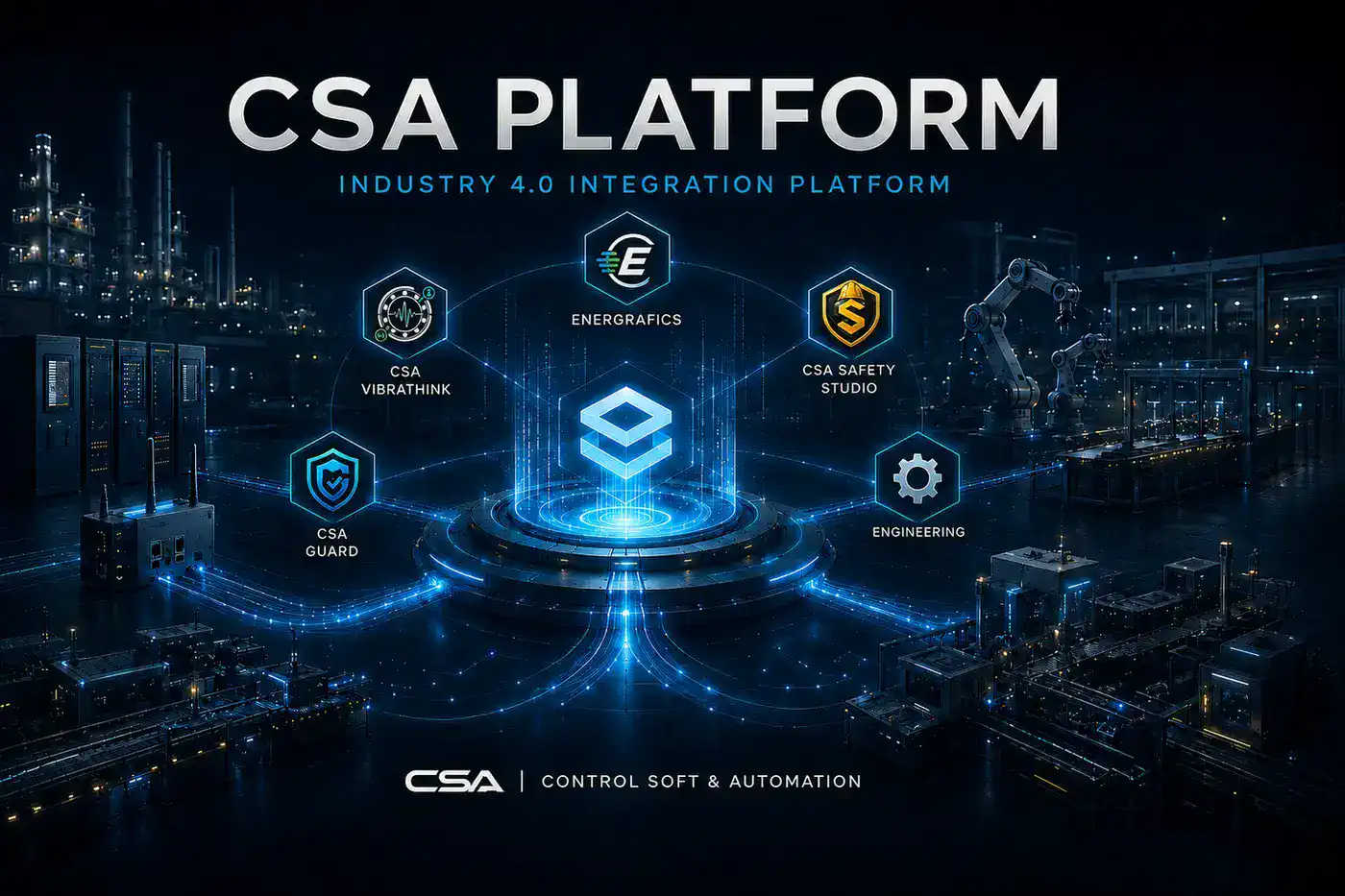
CSA PLATFORM · INDUSTRY 4.0 INTEGRATION PLATFORM
CSA Platform — industrial software platform for Industry 4.0
We connect machines, gateways, industrial data and specialized applications into one digital ecosystem for monitoring, maintenance, energy, machinery safety, OT security and enterprise integration.
FROM THE FACTORY TO ONE DIGITAL SYSTEM
Industry 4.0 is more than sensors and dashboards
In a modern factory, PLCs, SCADA systems, meters, sensors, gateways and maintenance applications continuously generate data. When that information remains isolated, its operational value is limited.
CSA Platform links existing industrial infrastructure with digital tools used for operation, maintenance, safety, energy management and decision-making. It does not automatically replace installed automation; it connects and organizes existing systems and turns data into a coherent view of the plant.
REAL TECHNICAL MONITORING
From sensor signal to a maintenance decision
CSA Platform can organize data by company, site, plant, department, line, machine, gateway and sensor. Information becomes easier to use by operators, engineers and management according to user rights.
CSA VibraThink monitors motors and industrial equipment using vibration and temperature measurements, DE/NDE points, condition, alarms, trends, history and bearing information.
- vibration and temperature monitoring;
- FFT, envelope and bearing-frequency analysis;
- warning and alarm thresholds;
- degradation history and trends;
- technical data for maintenance planning.

INDUSTRIAL SOFTWARE ECOSYSTEM
Specialized applications connected through CSA Platform
Each application addresses a distinct engineering domain. The platform provides identity, access, organization and a common direction for the resulting industrial information.

ENERGY MANAGEMENT
ENERGRAFICS
Monitoring of electricity, gas, steam, compressed air and other utilities with reports, alarms, specific-consumption KPIs and photovoltaic analysis.
View ENERGRAFICS →
MACHINERY SAFETY
CSA Safety Studio
Risk assessment, safety functions, components, validation, standards, SISTEMA projects and technical documentation for machinery conformity.
View Safety Studio →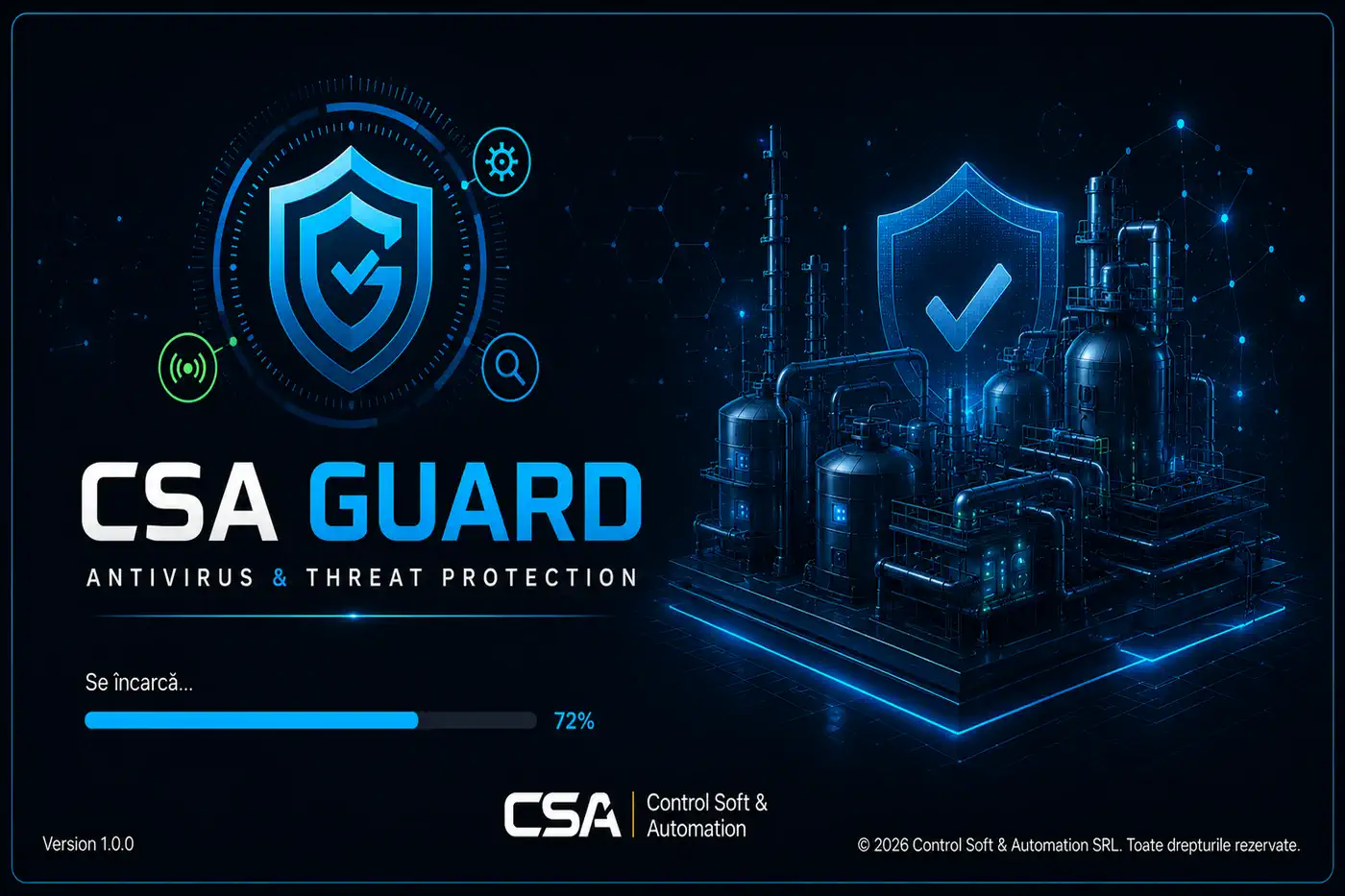
OT SECURITY
CSA Guard
Monitoring of industrial gateways and systems, unusual-behaviour detection, alerts, quarantine, policies and controlled filtering of legitimate traffic.
View CSA Guard →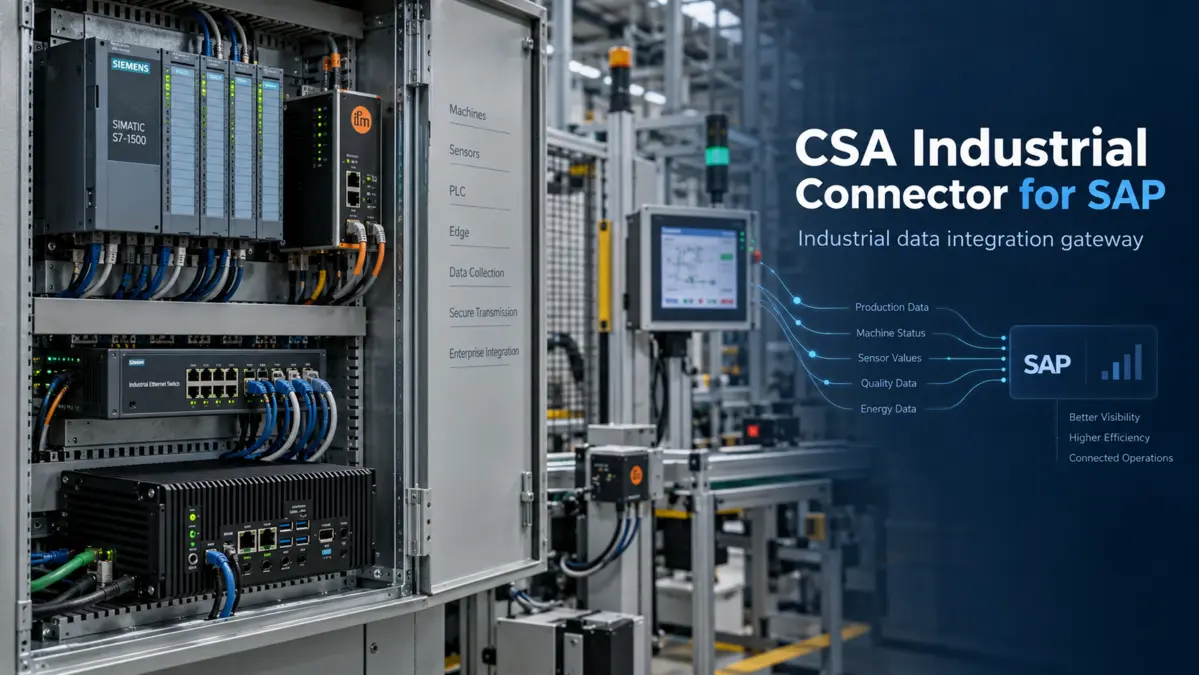
ENTERPRISE INTEGRATION
CSA Industrial Connector for SAP
Collects, validates and prepares PLC, SCADA and field-device data for SAP interfaces agreed with the customer.
View Industrial Connector →EDGE, GATEWAY AND INDUSTRIAL HISTORY
An architecture that can grow gradually
Gateways installed close to equipment can collect and process data locally, reduce unnecessary traffic and forward controlled information to the server. Exact protocol and device compatibility is established for each project.
Instantaneous data supports operations, while history provides context for consumption, alarms, process variation, degradation and maintenance results.
01Sensor or equipmentTechnical installation data
→02Industrial gatewayLocal collection and filtering
→03CSA PlatformOrganization, history and access
IMPLEMENTATION
Start with a measurable industrial problem
A practical Industry 4.0 project begins with a clear use case, a defined equipment scope and a limited set of indicators. We verify data availability and quality before expanding dashboards and integrations.
The solution can then grow from a pilot machine or line to department, plant or multi-site architecture while preserving documented interfaces and responsibilities.
TECHNICAL REFERENCE
Industry 4.0 built on verifiable industrial data
Digitalization should preserve safe process control while adding useful information for operations, maintenance and decisions.
Can an older machine be integrated without full replacement?
Sometimes existing PLC interfaces, an industrial gateway or additional sensors can be used. Documentation, permitted access, communication capability and cycle impact must be verified. Brownfield integration is assessed individually.
What is the difference between SCADA, MES and ERP?
SCADA supervises the process, MES organizes information related to production execution, and ERP supports business processes. Boundaries vary by implementation, so a sound architecture defines ownership of each data item and avoids conflicting duplication.
How should a first digitalization project be selected?
Choose a measurable problem, a clear equipment scope and a limited set of indicators. Verify data acquisition and quality before expanding dashboards or integrations. A pilot should demonstrate operational value, not merely connectivity.
Industry 4.0 grounded in real industrial data